
Tech4Change Hackathon
Less than 24 hours’ notice
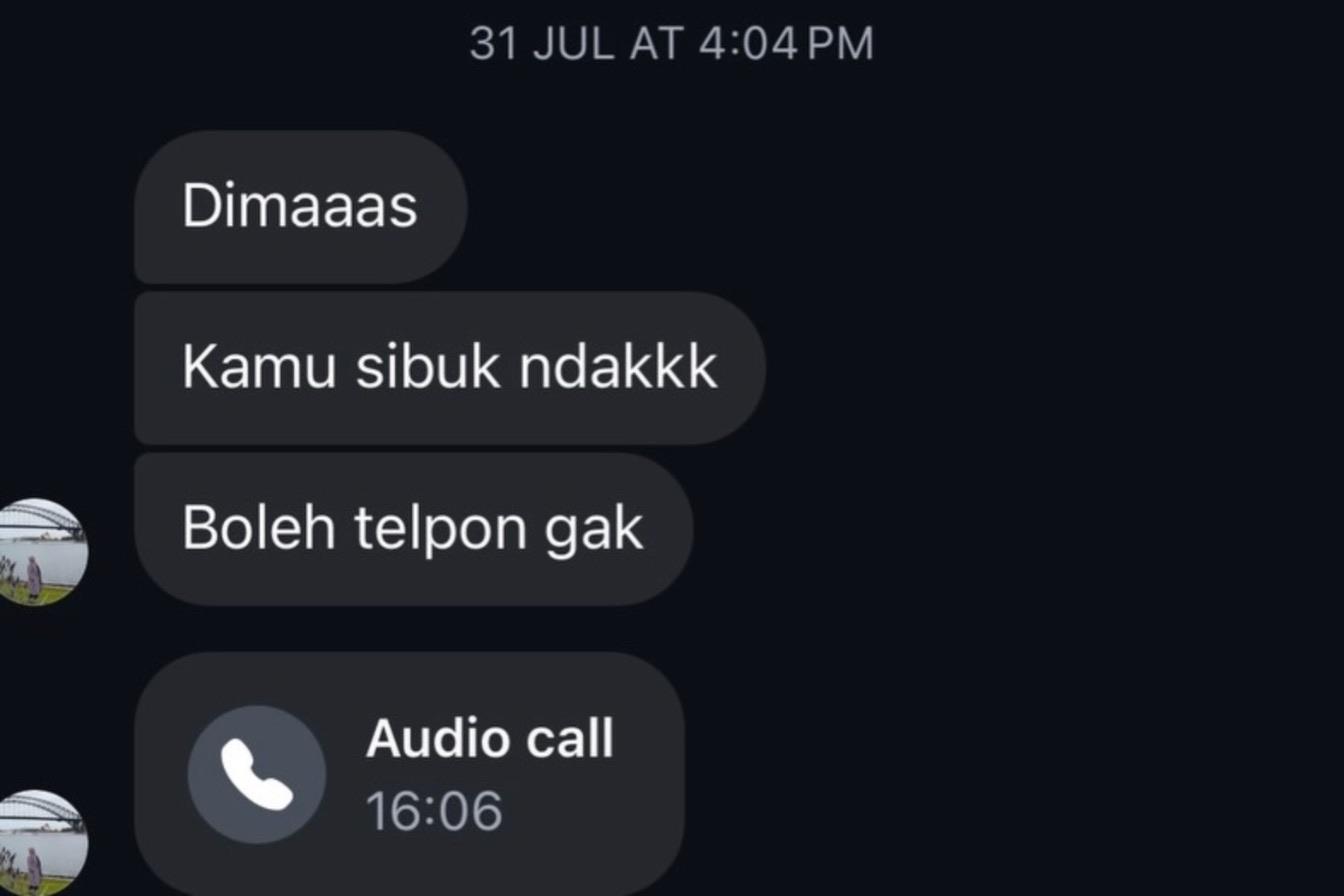
At 4:04 p.m. on a Friday, a friend messaged: “Dimaaas, are you busy? Can I call?” Two minutes later we were on the phone. By the end of the call, I was on a team for UQ Business School’s Tech4Change Hackathon, which started the next morning.
The four of them already had a problem worth solving. They needed someone to make the judges feel it.
Heat doesn’t knock down any buildings
- 15M+
- over 15 million Indonesian children face heatwaves (UNICEF)
- 6 in 10{p:60}
- people in Surabaya don’t act on government hazard alerts
- 0
- national heat action plans in Indonesia
Floods and earthquakes come with safety plans because the damage is easy to see. Heat leaves no damage you can see, so schools stay open and assembly goes on until a child faints. Surabaya is Indonesia’s second-largest city, home to more than 10 ethnic groups. Nothing there tells a school when the heat is dangerous, or what to do about it.
How do you warn a school about heat in a way nobody has to read?
Heat as a silent killer
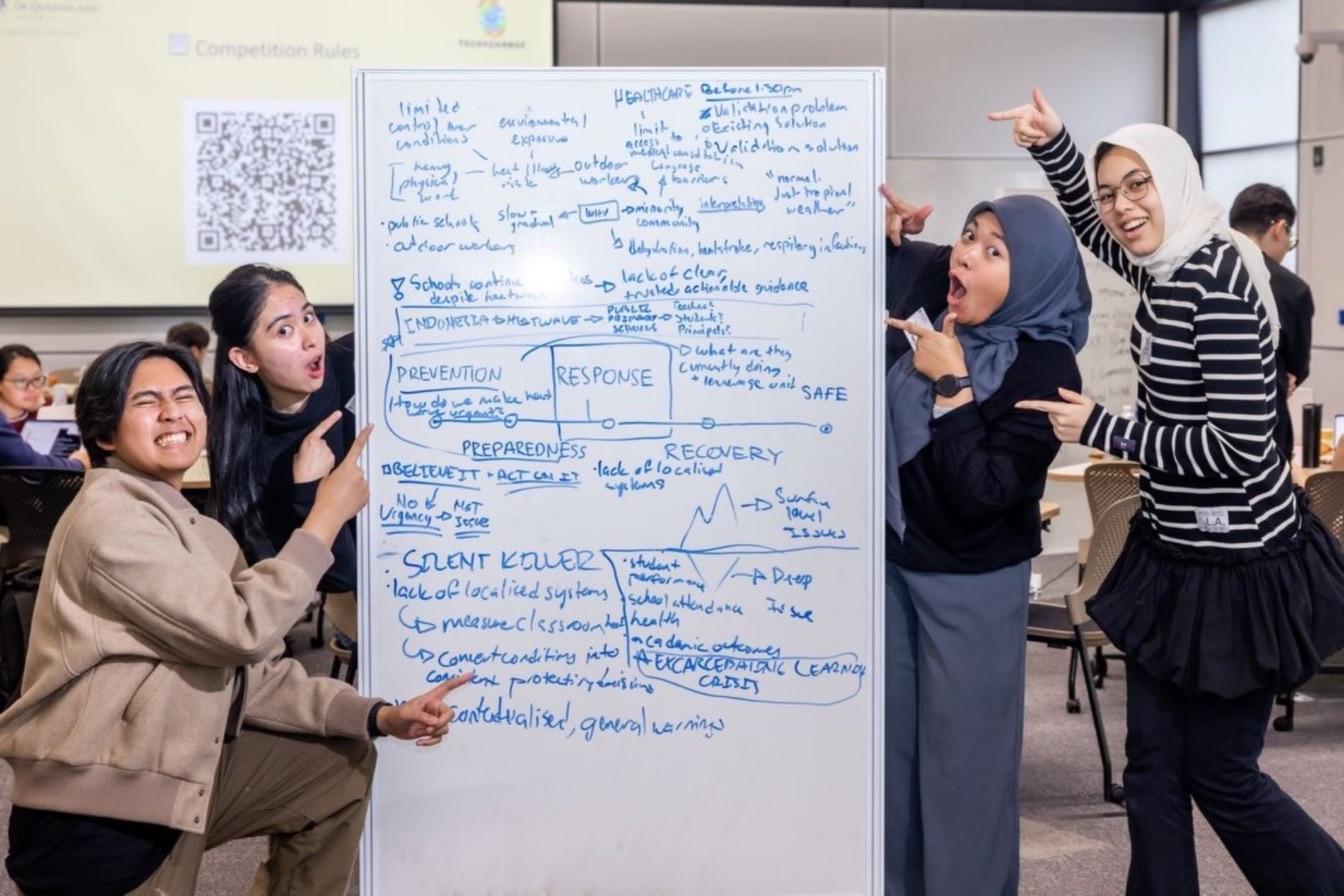
We spent the morning at the whiteboard. Heat hurts children slowly: dehydration, heatstroke, missed lessons. Forecasts exist, but a number on a weather app doesn’t tell a teacher what to do at recess.
We split the problem into prevention, response and recovery. Then we named the gap: people have to “believe it”, and then be able to “act on it”.
HeatMeter
A school preparedness system that turns weather data into one heat level, and every level into clear actions for teachers, parents and students.
- A dial in every classA poster gauge hangs in each classroom. Someone sets the needle each morning, and the actions for that level are printed beside it.
- Colours and faces, not wordsTemperature and humidity combine into one “feels like” number. It shows as colours and icons, so readers don’t need a shared language.
- One sensor per schoolA sensor board at each school measures its own conditions, alongside the official forecast from BMKG, Indonesia’s weather agency.
- A dashboard on the phoneTeachers and parents see the level in real time, with guidance, emergency contacts and alerts.
A working prototype, built on the same day
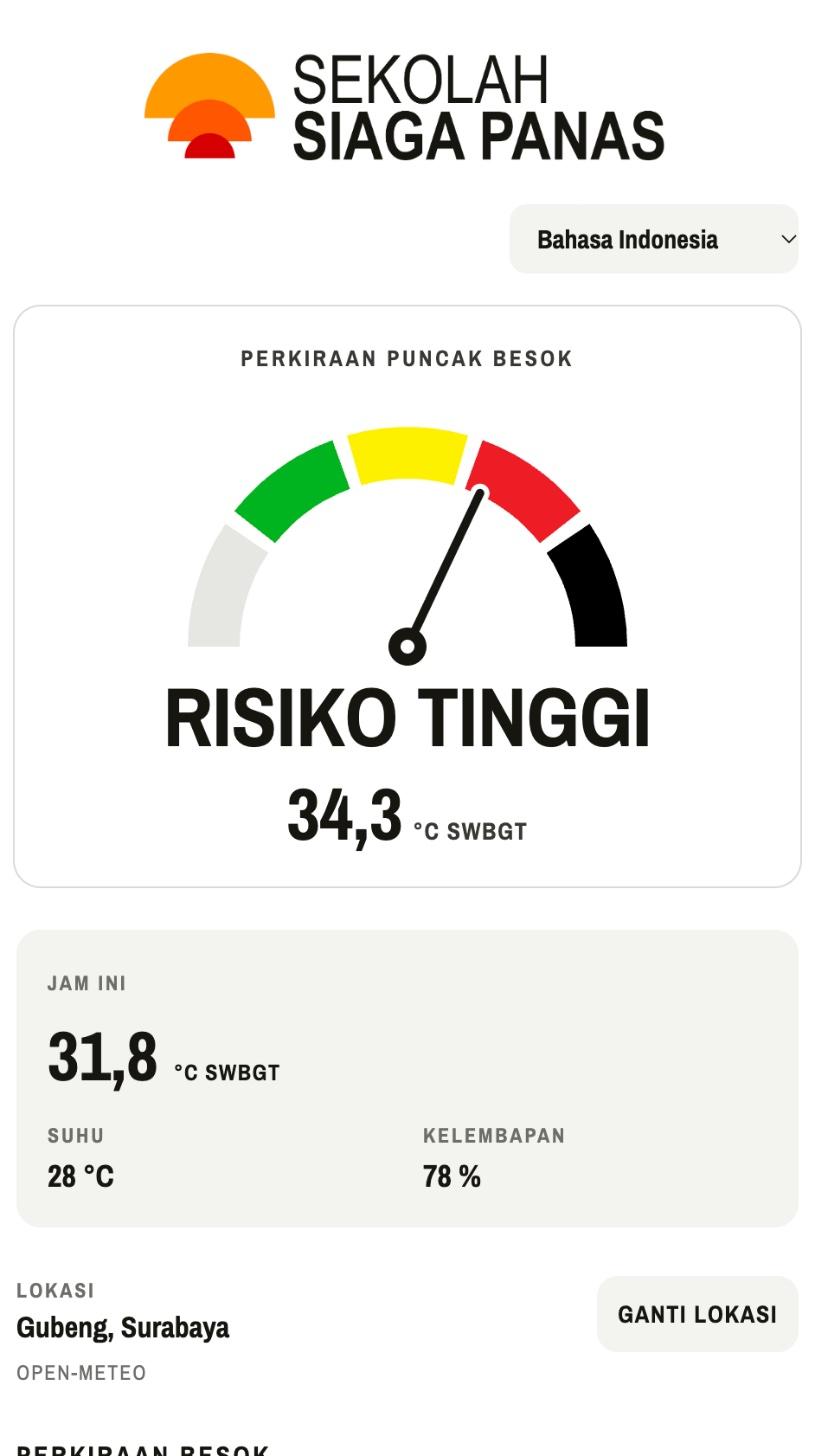
I also built the dashboard as a phone web app. A teacher picks the school’s village once. It pulls the BMKG forecast, with Open-Meteo as a backup, and works out the heat index for school hours. It shows the peak level, the forecast by hour and what to do: drink every hour, move sport before 11 a.m., report dizziness.
It installs to the home screen, works offline, and speaks Indonesian, Javanese, English and Chinese. The limits are provisional, and it says so.
My part
Skip the slides, and make the judges feel the heat before they hear a single number
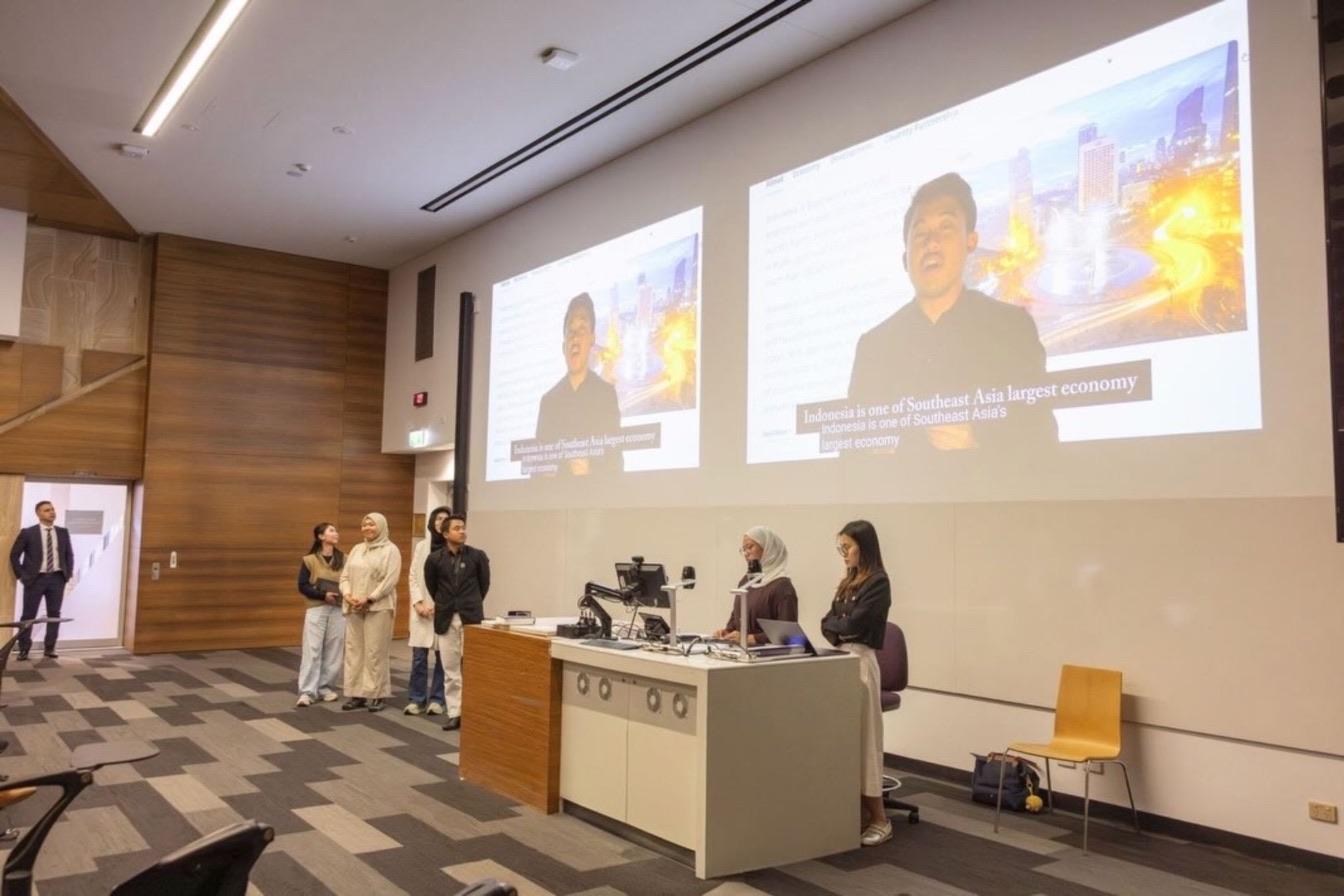
I co-wrote the story with the team, then directed, shot and edited it. We filmed around the UQ library until 1 a.m., and I edited through the rest of the night.
Four minutes, shot in one night
The pitch became a short film. Every scene had one job.
Cold open
Ms Sari, a Year 4 teacher in Surabaya, has 30 children and a forecast of 36°C. Assembly goes ahead. Just before lunch, a student says he feels dizzy, then collapses. No statistics yet: the judges watch it happen first.
The pitch film
The cut the judges saw, subtitles and all.
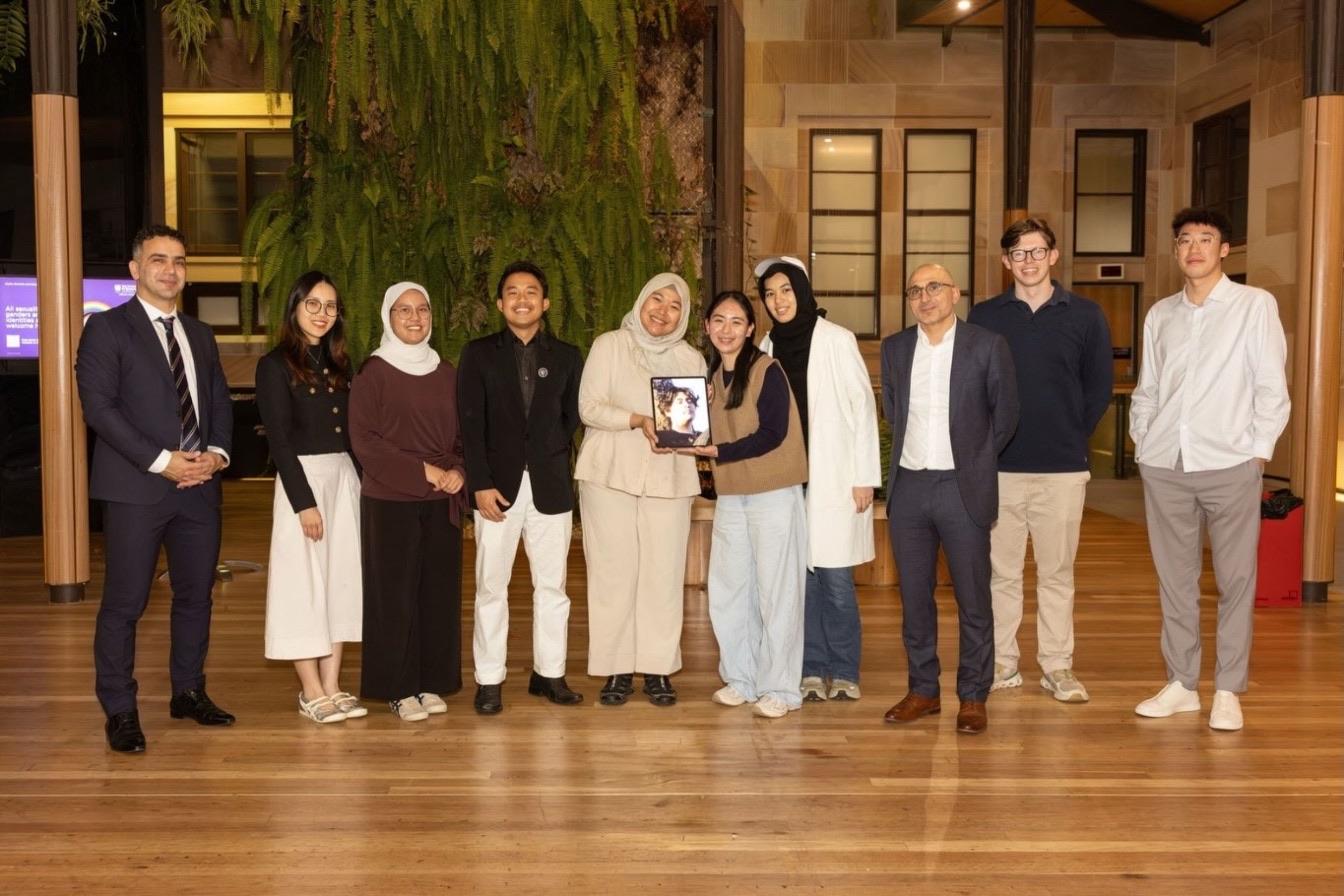
Creative Catalyst, accepted by iPad
I missed the ceremony. I had tickets to a Laufey concert, booked long before the hackathon existed. The team told me the news afterwards. We were finalists out of 33 teams, and the judges had created a new award, “Creative Catalyst”, because of how we told the story.
The team brought me into the photo anyway.
Result
- Top 8
- finalists, out of 33 teams
- 1
- new award, made for us: Creative Catalyst
- <24h
- from the first message to the hackathon’s start
- 1,419
- LinkedIn impressions on the write-up
Made with Ameera Khaira Tawfiqa, Reanne Besa, Marizal Fanani and Nanda Khairun Nissa, mentored by Dr Christoph Nedopil Wang.