
LAWup
People know the law matters. They can’t read it.
- 90%{p:90}
- say understanding Indonesian law is extremely important
- 57%{p:57}
- struggle with legal terminology
- 33 pts{b:90,57}
- between caring and understanding
Our interviews and survey found the same contradiction: legal language is dense, studying it feels boring, yet not knowing the law makes people anxious. That gap became the brief: make legal learning approachable enough to begin and simple enough to continue.
“There is no push to learn law because there is a lot of legal reading and it's hard to digest.”
“Lack of legal understanding can cause serious problems in my neighborhood, even though I'm not personally interested.”
The question
How might we present legal materials in an engaging and easy-to-understand way, simplify complex terminology, and overcome comprehension barriers?
Law, in bite-sized lessons
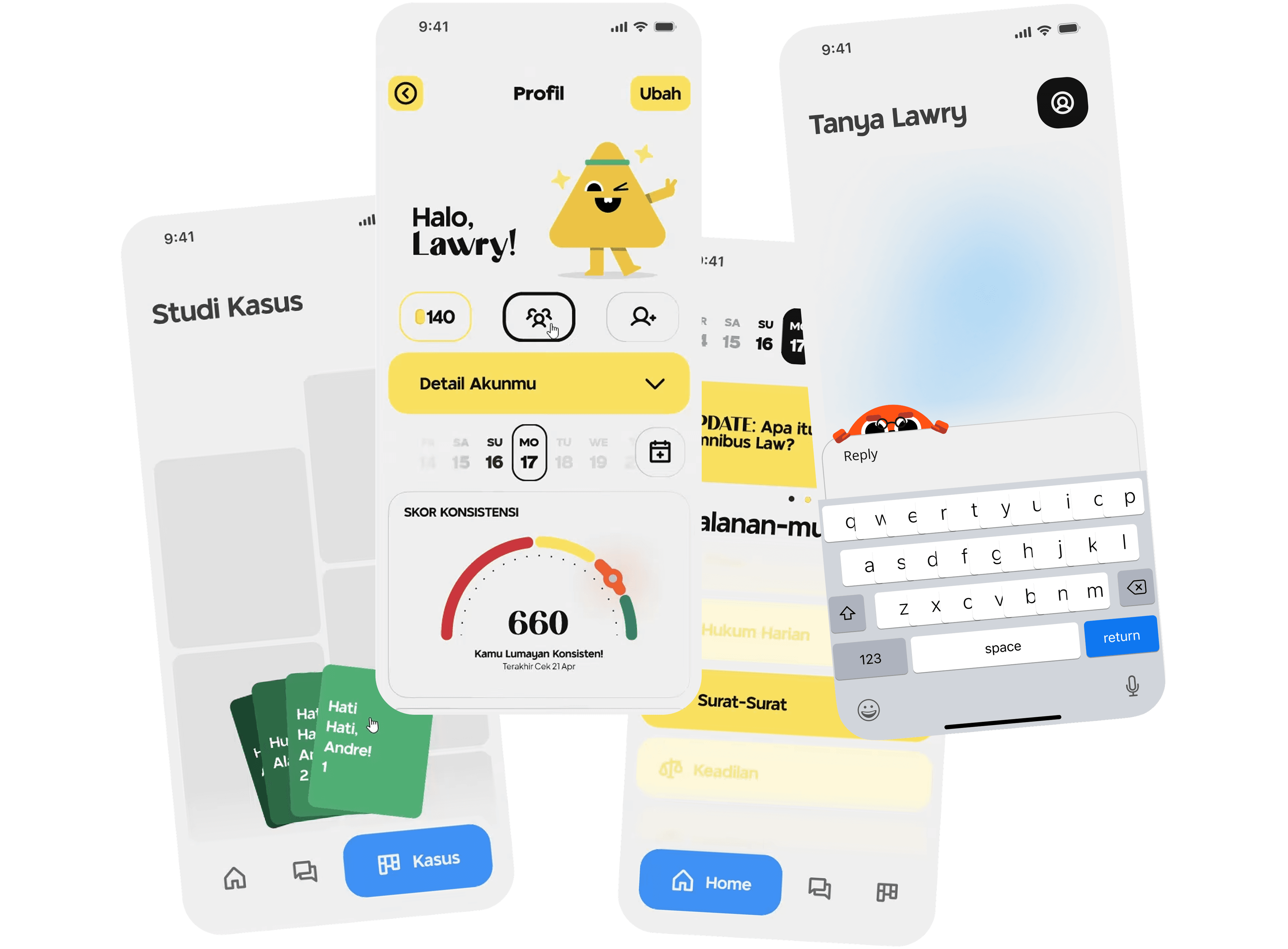
- Bite-sized lessons.Short chunks of material, reinforced with spaced-repetition flashcards.
- Tanya Lawry.An AI assistant that answers specific legal questions in plain language.
- Real cases.Each topic is learned through a real legal case it applies to.
- Levels, leaderboards, rewards.A points economy that keeps learners coming back.
How we got there
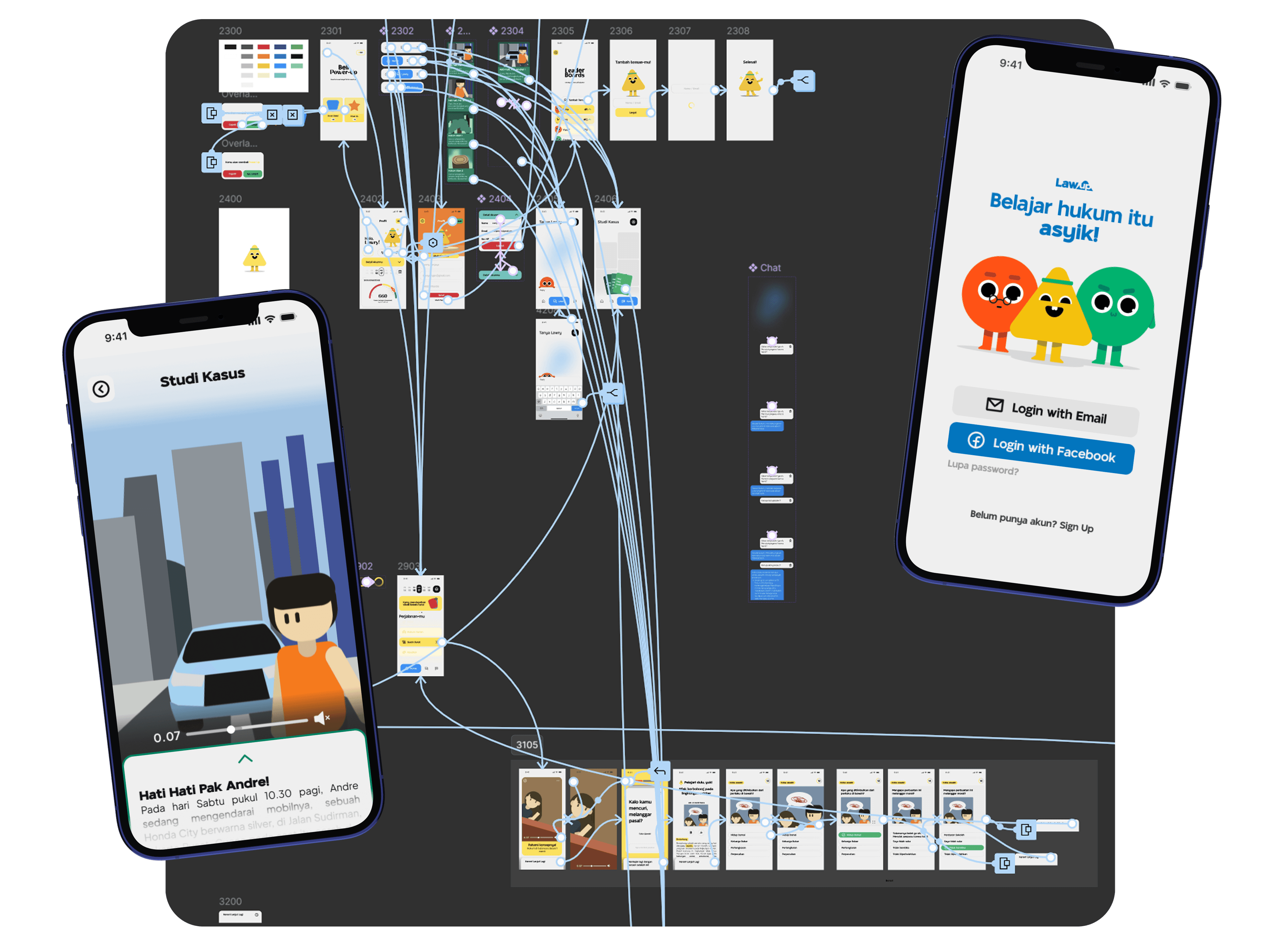
Five Design Thinking stages, from interviews to validated prototype{l:20,40,60,80,100}: empathise, define, ideate, prototype, test. We mapped every flow in Figma and used A/B tests to decide between competing designs.
 made withTim Ilmu Padi
Result
- 92%{p:92}
- of testers completed every task
- 5m 12s
- average time to complete them
- 1st{p:98}
- of 48 university teams at Find IT 2024